
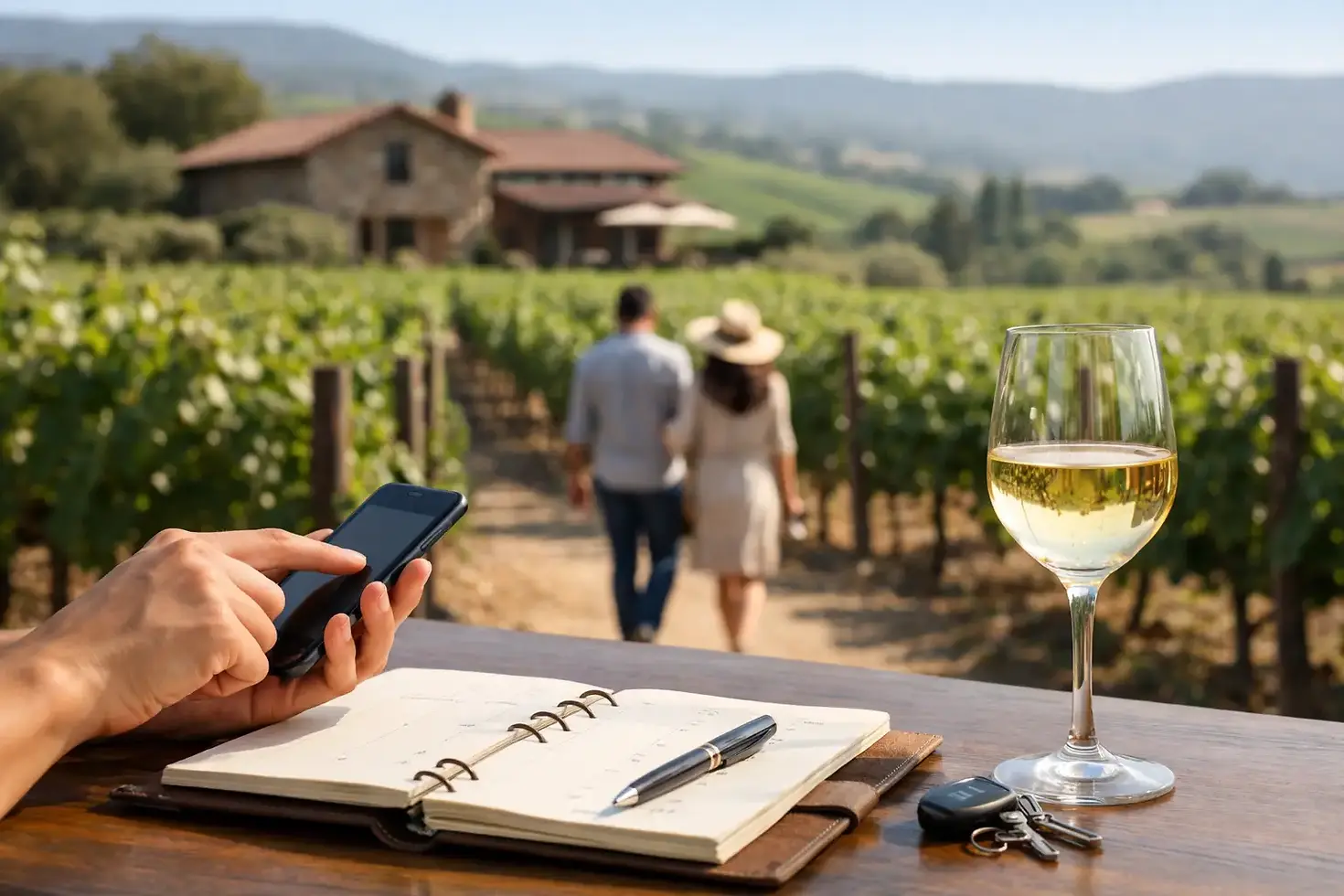
Are Winery Reservations Required in Napa?

If you are picturing a spontaneous wine country day where you pull off the road, wander into a beautiful tasting room, and grab a last-minute spot, here is the honest answer: are winery reservations required? In Napa, almost always yes. In Sonoma, often yes. And if you want a relaxed, well-paced day instead of a string of maybes, reservations make a huge difference.
That does not mean wine country has become stiff or hard to enjoy. It just means the best days tend to be planned at least a little in advance. Reservations help wineries staff properly, pace tastings, and give guests a better experience. For visitors, they remove the guesswork and make the day feel easy.
Are winery reservations required at most wineries?
At most Napa wineries, yes. Reservations are the norm, not the exception. Many properties are appointment-only, especially smaller producers, higher-end estates, and wineries offering seated tastings, food pairings, cave tours, or private experiences.
Sonoma gives you a bit more flexibility, but even there, plenty of popular tasting rooms and estate wineries strongly prefer advance booking. Weekend travel, harvest season, holidays, and sunny spring afternoons fill up fast. If your group has a specific winery in mind, assuming you can walk in is risky.
This shift is not just about exclusivity. Wineries have learned that scheduled visits create a better guest experience. Instead of a crowded bar and hurried pours, you are more likely to get a dedicated host, a reserved table, and time to actually enjoy the wines.
Why reservations are so common now
Wine tasting in Napa and Sonoma is much more curated than it used to be. Many wineries are not built for high-volume drop-ins. They are designed around hospitality, storytelling, and personalized service.
That matters because staffing, seating, and even permits can limit how many guests a property can host at once. Some wineries are on quiet country roads with strict local rules around traffic and visitation. Others intentionally keep guest counts low to preserve a calm, premium feel.
From a visitor standpoint, that can be a good thing. A reserved tasting usually means less waiting, more attention, and a more polished experience. The trade-off is simple: you give up some spontaneity, but you gain a smoother day.
When walk-ins might still work
Walk-ins are not impossible. They are just less dependable.
You are more likely to find walk-in availability at larger tasting rooms, wineries in town centers, or casual spots with bar service. Sonoma Plaza, Healdsburg, downtown Napa, and a few well-known corridors tend to offer more flexibility than remote appointment-only estates.
Weekdays are also easier than weekends. A Tuesday in January is very different from a Saturday in May. Small groups usually have better luck than parties of six or eight, and early arrivals often do better than late afternoon drop-ins.
Still, even when walk-ins are allowed, availability can disappear quickly. You may get a spot right away, or you may be told to come back in an hour. That may sound manageable until it throws off lunch, transportation timing, and your next tasting.
Napa vs. Sonoma: the reservation difference
If you are deciding between Napa and Sonoma, this is one area where the regions do feel a little different.
Napa is generally more reservation-driven. Tastings are often seated, structured, and hosted. Many wineries expect guests to arrive at a specific time, and some do not accept walk-ins at all. The experience can feel very elevated, but it also rewards planning.
Sonoma often feels a bit more relaxed. You can still find appointment-focused wineries there, especially at the premium end, but the overall culture tends to leave slightly more room for flexibility. That said, the best-known properties and the most scenic experiences still book up in advance.
So if your goal is a carefree day with no stress, both regions benefit from reservations. Napa practically requires them. Sonoma strongly encourages them.
Are winery reservations required for private tours?
If you are booking a private wine tour, reservations are usually part of the equation and should absolutely be handled ahead of time. That is especially true if you want wineries that match your taste, your budget, and your group’s vibe.
A good private tour day is not just about getting into three wineries. It is about pacing. You want travel time that makes sense, tasting styles that complement each other, and enough breathing room for lunch, photos, and those moments when everyone wants to linger a little longer.
That is where planning pays off. With a hosted experience like Curated Winery Tours, the reservation process is built into the day design, which means fewer moving parts for you and a much better shot at getting the wineries you actually want.
How far ahead should you book?
It depends on the season, the group size, and how specific you are about your must-visit list.
For busy weekends in spring, summer, and fall, booking two to four weeks ahead is smart. For harvest season or special occasions like birthdays, bachelorettes, and corporate outings, even earlier is better. If your group is larger than six, the timeline usually needs to be longer because group-friendly wineries have fewer open slots.
If you are visiting midweek or during a quieter season, you may have more flexibility. But even then, waiting until the last minute can limit your options. The most popular wineries are popular for a reason, and prime times go first.
What happens if you skip reservations?
Sometimes it works out. Sometimes it becomes a day of calling around from the car and hoping for openings.
Without reservations, you may end up settling for whatever happens to be available instead of what actually fits your group. That can mean rushed service, inconvenient locations, long gaps between tastings, or wineries that are simply not your style.
For couples, that might just be mildly disappointing. For celebrations or group outings, it can be a real momentum killer. Nobody wants the energy of the day to turn into logistics management.
That is the biggest reason we recommend planning ahead. It is not about being formal. It is about protecting the fun.
How to plan a smooth tasting day
Start with how you want the day to feel. Do you want bold reds in grand Napa estates? A laid-back Sonoma afternoon with a picnic? Sparkling wine, food pairings, or smaller hidden-gem producers? Once you know the mood, the reservation choices get much easier.
From there, keep the schedule realistic. Three wineries is a sweet spot for most full days, especially if lunch is involved. Four can work, but only if the route is tight and the group moves efficiently. More than that usually starts to feel rushed.
It also helps to mix experience styles. If every stop is a formal ninety-minute seated tasting, the day can drag. A balanced itinerary might include one scenic estate, one intimate boutique producer, and one fun, relaxed finish.
And if anyone in your group has dietary needs, mobility concerns, or strong preferences about wine styles, mention that early. The right reservations are not just about availability. They are about fit.
A few exceptions worth knowing
Not every wine country stop needs a reservation. Some urban tasting rooms, casual bars, and food-and-wine venues are built for drop-in traffic. Those can be great anchors if you want part of the day to stay flexible.
Also, some wineries technically accept walk-ins but still prioritize guests with bookings. In practice, that means reserved guests get the best seating and the easiest experience. So even when reservations are not strictly required, they are often the better move.
If you are traveling on a holiday weekend, with a larger group, or with anyone who values comfort over uncertainty, reservations go from helpful to essential pretty quickly.
The real answer: yes, if you want the best day
So, are winery reservations required? Strictly speaking, not every single time at every single winery. But if you are aiming for a great Napa or Sonoma day, the practical answer is yes.
Reservations give you choice. They give you better pacing, better hospitality, and a much lower chance of standing around wondering what to do next. Wine country should feel easy, celebratory, and well taken care of. A little planning is what makes that possible.
If you want to leave room for good vibes and still know the day is handled, book ahead. Your future self, and probably everyone riding with you, will be glad you did.


Comments